The Role of Attention in Memory Retention
Memory and attention are deeply connected. You can’t remember what you never truly noticed. In a world full of distractions, attention has become one of the most important and overlooked factors in memory retention.
Understanding how attention works can dramatically improve the way you learn, remember, and process information.
Why Attention Is the Gateway to Memory
Before information becomes a memory, it must pass through attention.
Your brain receives enormous amounts of sensory input every second, but only a small fraction is selected for further processing. Attention acts like a filter, deciding what deserves mental resources.
If information doesn’t receive attention, it never reaches memory storage.
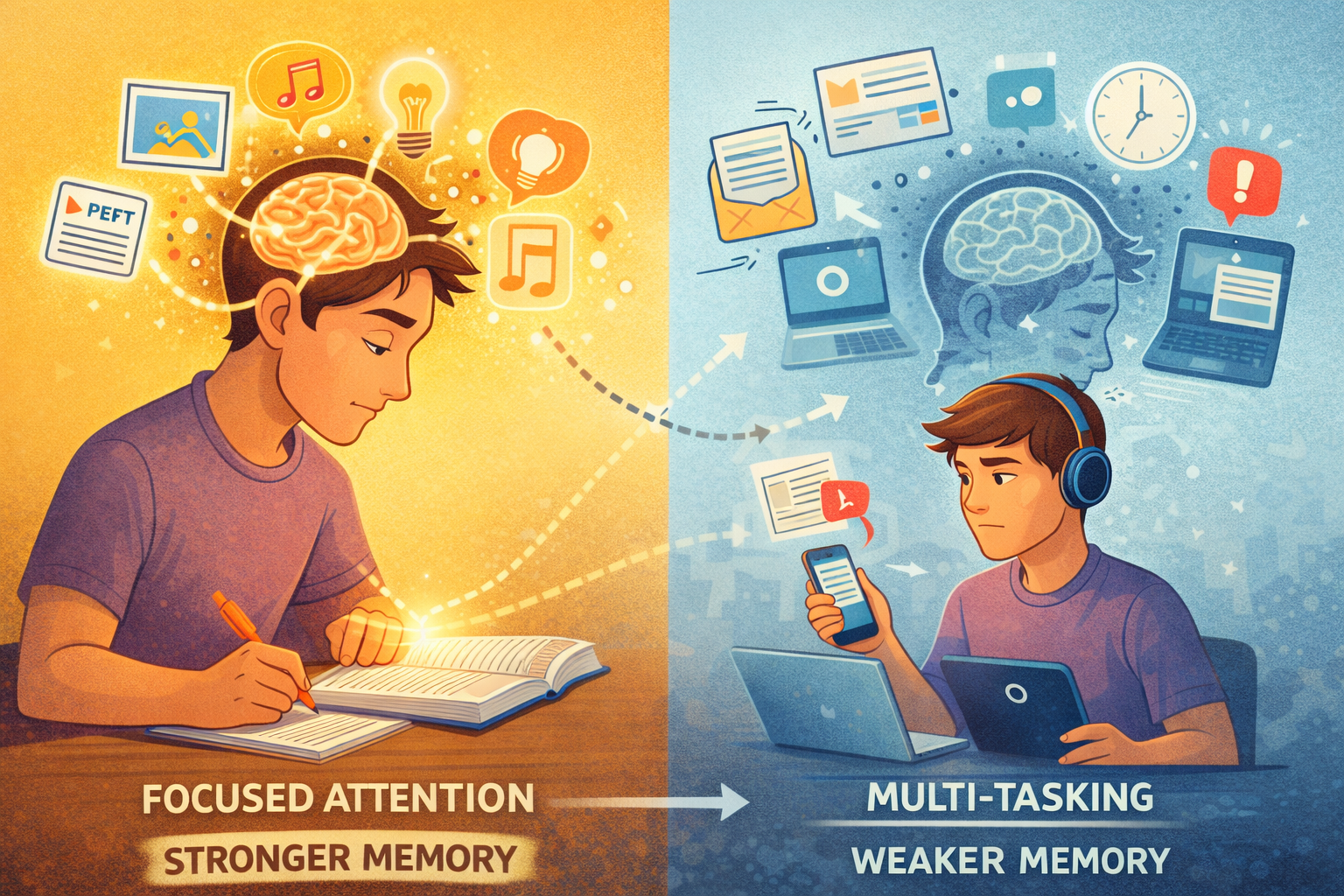
Focused Attention vs Divided Attention
Focused Attention
When you concentrate on a single task:
- information is encoded more deeply
- neural connections strengthen faster
- recall becomes easier
This is why focused study sessions are far more effective than long, distracted ones.
Divided Attention
Multitasking forces the brain to constantly switch focus. This leads to:
- shallow encoding
- weaker memories
- faster forgetting
Even short interruptions can significantly reduce memory retention.
Attention Strengthens Encoding
Encoding is the process of turning experiences into memories.
When attention is strong:
- the hippocampus encodes information more effectively
- details are linked together meaningfully
- emotional and contextual cues are preserved
Without attention, encoding becomes fragmented and incomplete.
The Role of Attention in Long Term Memory
Attention doesn’t just affect learning in the moment, it determines what gets stored long-term.
Information that receives sustained attention is:
- more likely to be consolidated during sleep
- easier to retrieve later
- more resistant to interference
This explains why we remember meaningful conversations but forget background noise.
Distraction: The Enemy of Memory
Modern life constantly pulls attention away:
- smartphones
- notifications
- multitasking environments
Each distraction competes for cognitive resources, weakening memory formation. Over time, chronic distraction trains the brain to process information superficially.
How to Improve Attention for Better Memory
Improving attention improves memory automatically. Here are practical strategies:
- eliminate distractions during learning
- set clear intentions before starting a task
- work in short, focused intervals
- engage actively (ask questions, take notes)
- practice mindfulness to strengthen focus
Even small improvements in attention can lead to major memory gains.
Emotion and Attention Work Together
Emotion naturally captures attention. When something feels important or meaningful, attention increases and memory strengthens.
This is why emotionally charged events are easier to remember. Purposefully adding relevance and interest to learning can boost retention.
Attention is the foundation of memory retention. Without it, information fades before it ever has a chance to become a memory.
In an age of constant distraction, protecting your attention is one of the most powerful ways to improve memory, learning, and mental clarity.
Remember: what you focus on is what you remember.