How Short-Term and Long-Term Memory Really Work - A Practical, Simple Explanation
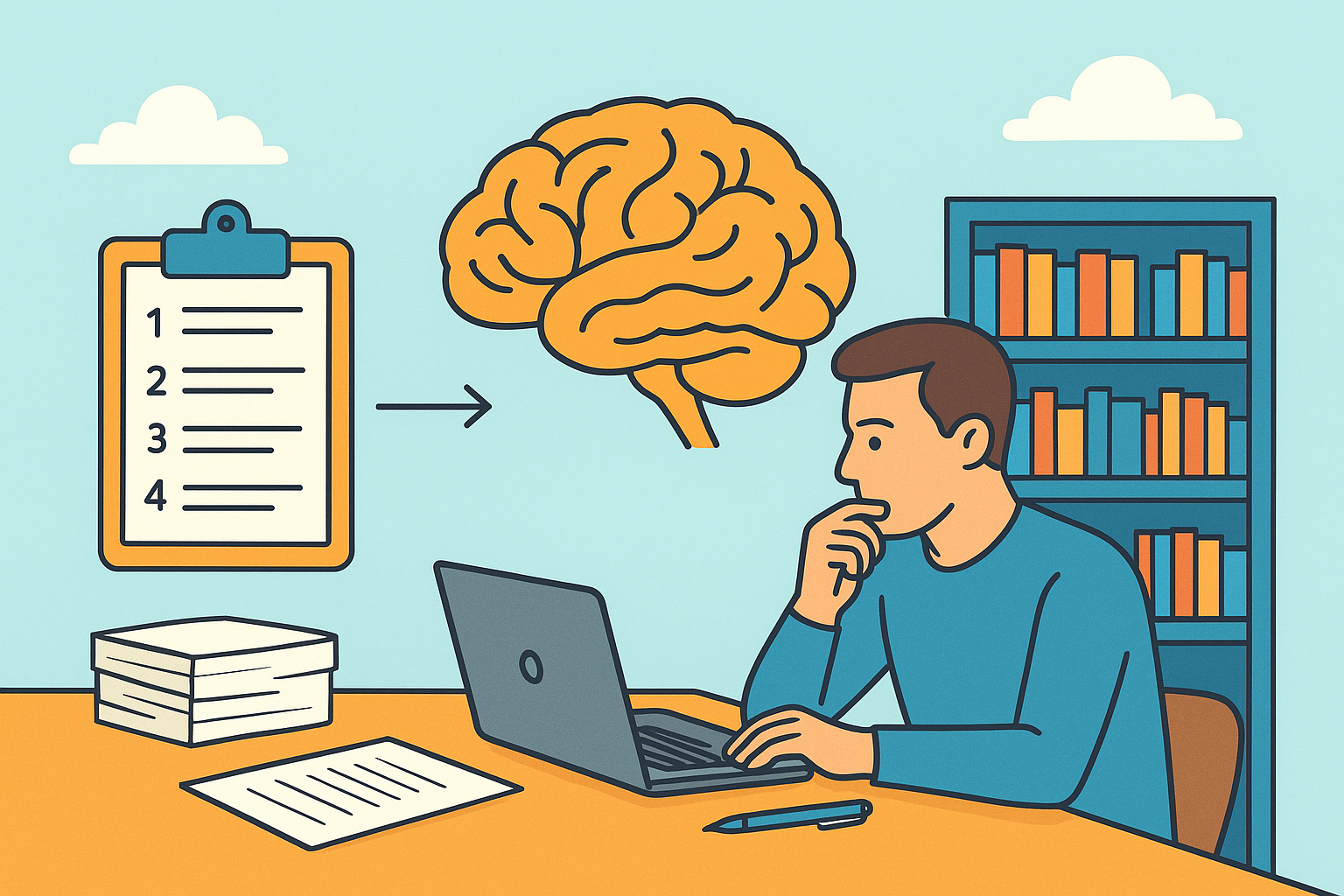
Memory is one of the most fascinating abilities of the human brain. It helps us navigate daily tasks, learn new skills, recognize faces, and make decisions. Yet most people don’t really understand how memory works - they just hope it does. In reality, memory is not one thing. It’s a system with different parts that work together, each with its own strengths and limitations.
This article explains how short-term memory and long-term memory work in a simple, practical way - no complicated neuroscience required.
1. What Is Short-Term Memory?
Short-term memory (STM) is the brain’s temporary holding space. Imagine it as a small mental “clipboard” where you keep information for a short time before either using it or discarding it.
Key characteristics of short-term memory:
- Holds information for 10-20 seconds, unless you actively repeat it.
- Has a very limited capacity - most adults can store about 7 items (plus or minus 2).
- Easily disrupted by distractions.
Example in everyday life:
You look up a phone number and keep it in mind just long enough to type it.
If someone interrupts you - “Hey, can you come here for a sec?” - the number disappears instantly.
That’s STM in action.
2. Working Memory: The “Active Version” of Short-Term Memory
People often confuse short-term memory with working memory. Working memory is like STM with a built-in workspace. It doesn’t just store information - it lets you manipulate it.
Examples:
- Doing mental math.
- Keeping track of steps in a recipe while cooking.
- Remembering what you want to say while someone is still talking.
Working memory is essential for problem-solving, learning, reading comprehension, and decision-making.
3. What Is Long-Term Memory?
Long-term memory (LTM) is your mind’s permanent storage system. Once information moves here, it can stay for days, months, years - or even a lifetime.
Key characteristics of long-term memory:
- Huge capacity - practically unlimited.
- Long duration - memories can last forever if reinforced.
- Organized into networks of associations.
Everyday example:
You remember your first day of school, how to ride a bike, or the meaning of the word “coffee.”
These memories don’t fade after a few seconds - they’re part of your knowledge base.
4. How Short-Term Memory Becomes Long-Term Memory
The process of converting short-term memory into long-term memory is called encoding. Several things help with this:
1. Repetition (especially spaced repetition)
Repeating something once is usually not enough.
Repeating it over time strengthens neural connections.
2. Meaning and understanding
You remember better when information makes sense to you.
A random number is easy to forget, but your birthdate isn’t.
3. Organization
The brain loves structure. Chunking information into groups is extremely effective:
- 194520231900
vs. - 1945 / 2023 / 1900
The second version is much easier to remember because it’s organized.
4. Emotion and importance
Emotionally charged experiences (both positive and negative) are encoded deeply.
That’s why you remember your wedding day - or the time you embarrassed yourself - vividly.
5. Why We Forget
Forgetting is not a flaw - it’s a feature.
The brain filters out unimportant information to save mental energy.
Main reasons we forget:
- Decay: memories fade if they’re not used.
- Interference: new information pushes out old information.
- Distraction: divided attention blocks proper encoding.
- Stress: high stress hormones weaken memory formation.
Forgetting keeps your mental “inventory” manageable.
6. How to Strengthen Both Types of Memory
Here are simple, science-backed strategies:
For short-term/working memory:
- Reduce distractions
- Practice mental math or memory games
- Use chunking
- Keep your workspace and digital space organized
For long-term memory:
- Use spaced repetition (Anki, flashcards)
- Explain concepts in your own words
- Connect new ideas to things you already know
- Sleep well - memories consolidate during sleep
- Teach the material to someone else
7. Final Thoughts
Short-term memory is your brain’s quick scratchpad: limited, fragile, and temporary.
Long-term memory is your vast library: durable, organized, and powerful.
Understanding how these systems work helps you learn more effectively, remember more deeply, and function more efficiently - whether you’re studying, working, or simply trying to recall where you left your keys.