Can Artificial Intelligence Replace Human Memory?
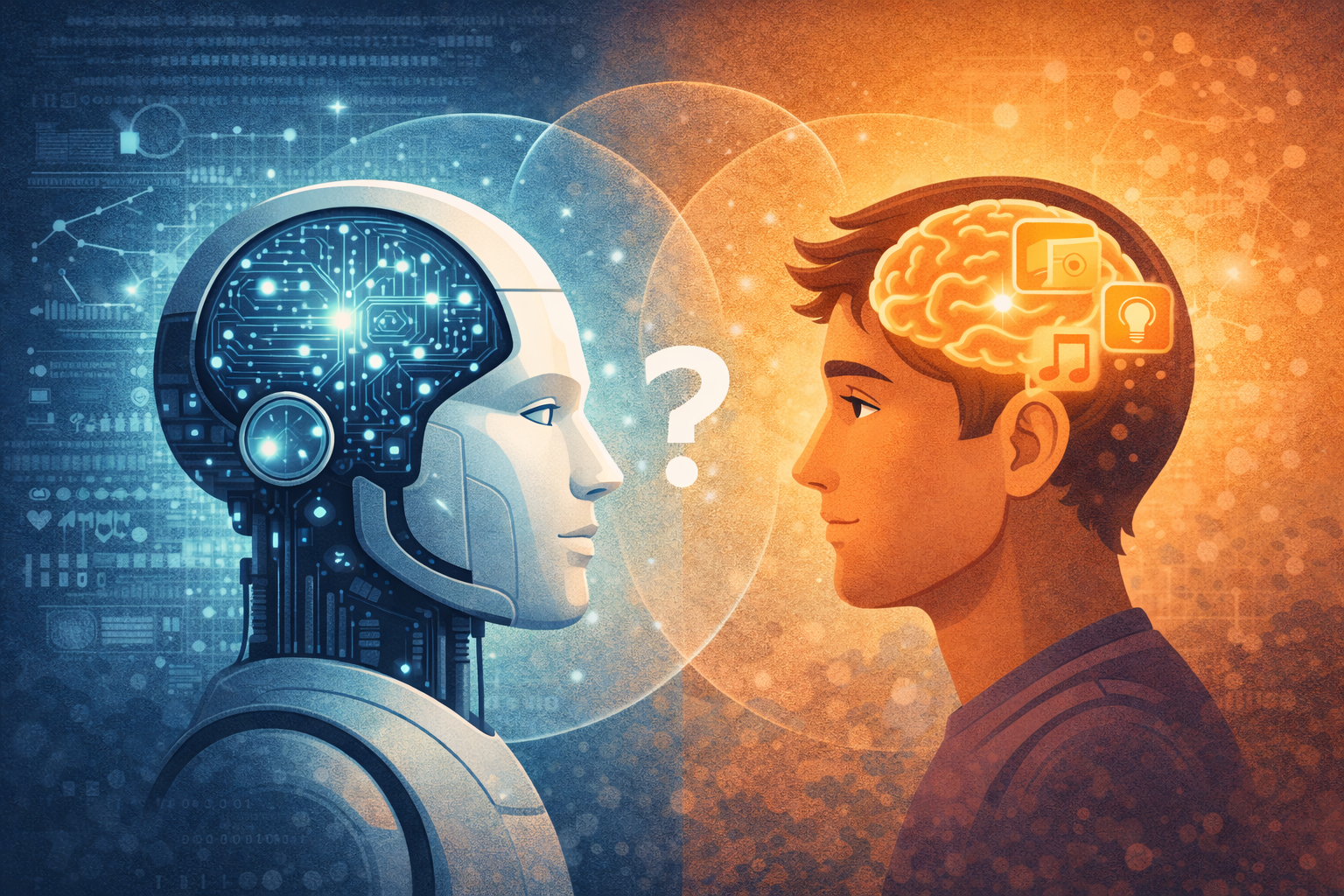
Artificial Intelligence is transforming the way we store, access, and process information. From search engines to digital assistants, AI remembers more data than any human ever could. This raises an important question: can artificial intelligence replace human memory?
The answer is more complex than a simple yes or no.
What Human Memory Really Is
Human memory is not just a storage system. It is deeply connected to:
- emotions
- personal experiences
- meaning and context
- identity and consciousness
Our memories shape how we think, make decisions, and understand the world. They are flexible, subjective, and constantly changing.
What AI Memory Looks Like
AI systems store information very differently:
- data is precise and permanent
- recall is instant
- storage capacity is virtually unlimited
AI does not forget unless programmed to. It does not distort memories or reinterpret them emotionally. This makes AI extremely powerful for tasks like data analysis, pattern recognition, and knowledge retrieval.
Where AI Outperforms Human Memory
AI already surpasses human memory in many areas:
- remembering massive datasets
- retrieving information instantly
- maintaining perfect accuracy
- operating without fatigue
For factual recall, documentation, and technical knowledge, AI is far more reliable than the human brain.
Where Human Memory Remains Irreplaceable
Despite AI’s strengths, human memory has qualities machines cannot replicate:
- emotional depth
- personal meaning
- creativity and imagination
- moral judgment
- lived experience
Memories are not just facts, they are stories connected to feelings, values, and identity. AI does not experience anything.
Memory Is Not Just Recall
Human memory allows us to:
- learn from mistakes
- form relationships
- empathize with others
- imagine future possibilities
These functions rely on subjective interpretation, not perfect accuracy. Forgetting, in fact, is often beneficial, it helps us prioritize and adapt.
AI as an Extension, Not a Replacement
Rather than replacing human memory, AI is becoming a powerful extension of it.
AI helps us:
- store external knowledge
- reduce cognitive overload
- focus on creative and strategic thinking
This partnership allows humans to think better, not less.
The Risk of Over-Reliance on AI Memory
Depending too heavily on AI can weaken certain cognitive skills:
- reduced memorization
- shallow learning
- loss of deep understanding
The challenge is balance - using AI as a tool without allowing it to replace thinking.
The Future of Memory
The future is not about choosing between human memory and AI memory. It is about integration.
Human memory provides meaning, creativity, and emotional intelligence.
AI provides speed, accuracy, and scale.
Together, they create something more powerful than either alone.
Artificial intelligence can store more information than any human mind but it cannot replace what memory truly is.
Human memory is not a database. It is a living, evolving part of who we are.
AI will continue to change how we remember, but it will not replace the human experience behind memory.